WMT manuals provide a one-stop source for ship technical information and operating procedures in a user-friendly format, highly valued by ship staff.
Our high-quality manuals are an essential tool for officers, cadets and ratings – whether they are long-serving members on board or have newly joined.
Shore-based management also benefits from the manuals when it becomes necessary to communicate with the vessel while addressing technical issues involving systems and equipment.
As part of our process, we verify systems and equipment on board for accuracy. Click here to find out more about our Systems Verification Surveys.
Our Vessel Operating Manuals
Cargo Systems Operating Manuals
Suitable for:
- LNGCs, VLECs and LPG carriers
- Oil and chemical tankers
- Dry cargo vessels and container ships
- Offshore Supply Vessels (OSVs)
Our cargo manuals cover all aspects of cargo operations and associated equipment. Each section makes use of detailed illustrations and photographs of the equipment taken during visits to the vessel, where applicable.
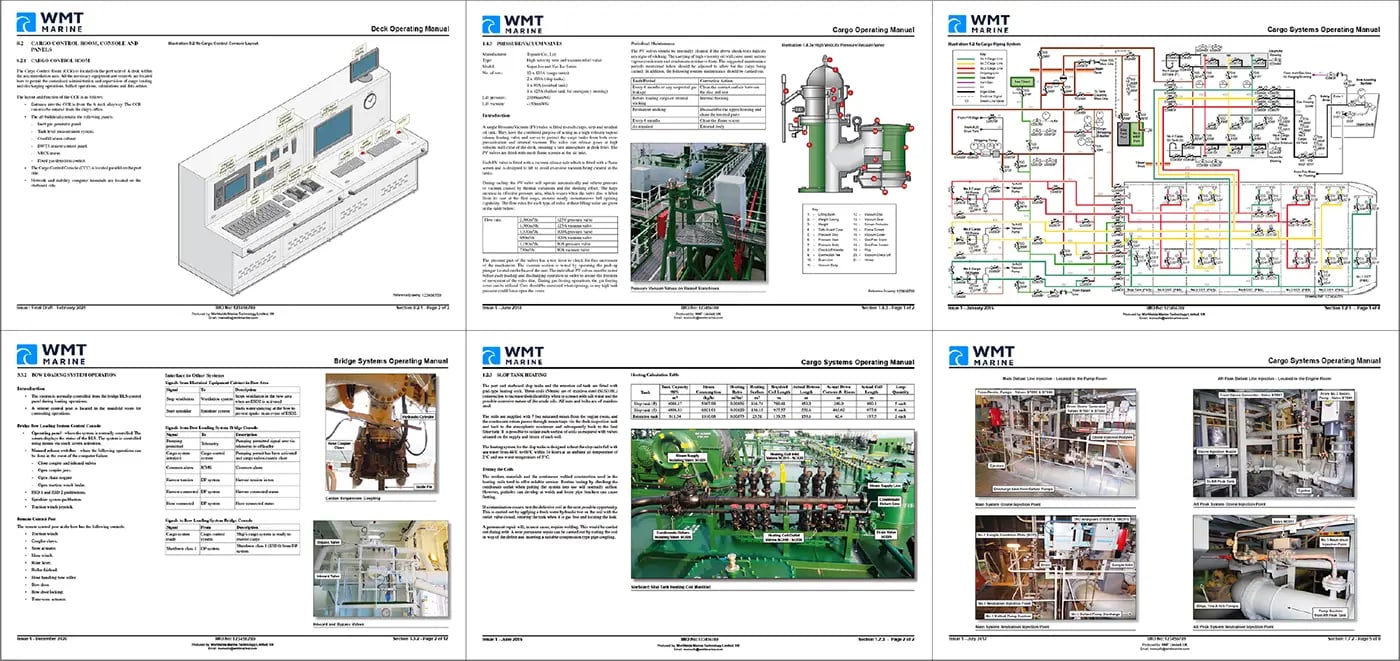
Cargo System Description
Design concept and capacity of the vessel. Detailed information on the essential equipment used in loading and discharging cargo and maintaining the cargo tanks in a safe inert condition.
Cargo Handling Procedures
Detailed descriptions of cargo operations. Ship-specific examples and flow diagrams cover loading, discharging, ballasting, tank cleaning, gas freeing, warming-up and cooling-down.
Cargo Control Systems
Detailed information on the equipment in the Cargo Control Room, including cargo control systems, cargo tank instrumentation and cargo sampling equipment.
LNG Bunkering Manuals
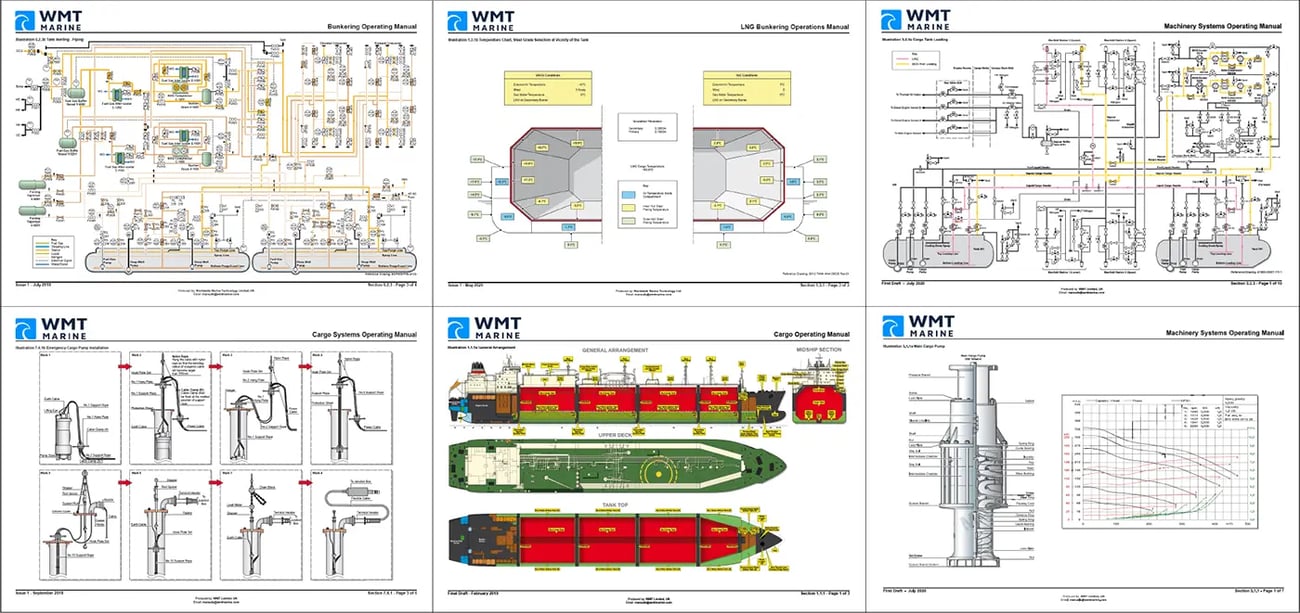
LNG bunkering manuals cover all aspects of LNG transfer between an LNG bunkering facility, barge or vessel, together with the associated operations and equipment.
Detailed information, including reference illustrations, is provided on containment-system types, technologies, rules and regulations.
Each section makes use of detailed illustrations and photographs of the equipment taken during visits to the vessel, where applicable.
Design Concept of the Vessel
Design concept and capacity of the vessel. Detailed information on the essential equipment used in loading and discharging cargo and maintaining the cargo tanks in a safe inert condition.
Safety
The safety section covers qualifications and training, hazards and precautions, bunkering prerequisites, and emergency shutdown and control systems.
LNG Bunkering Operations
Detailed descriptions of LNG bunkering operations, including ship-specific examples and flow diagrams covering bunker-line cool-down, tank inerting, warm-up, aeration, drying, cool-down and transfer between bunker tanks.
Emergency Operations
This section covers contingency planning and emergency operations such as LNG leakage, fire, injury and communications failure.
Machinery Systems Operating Manuals
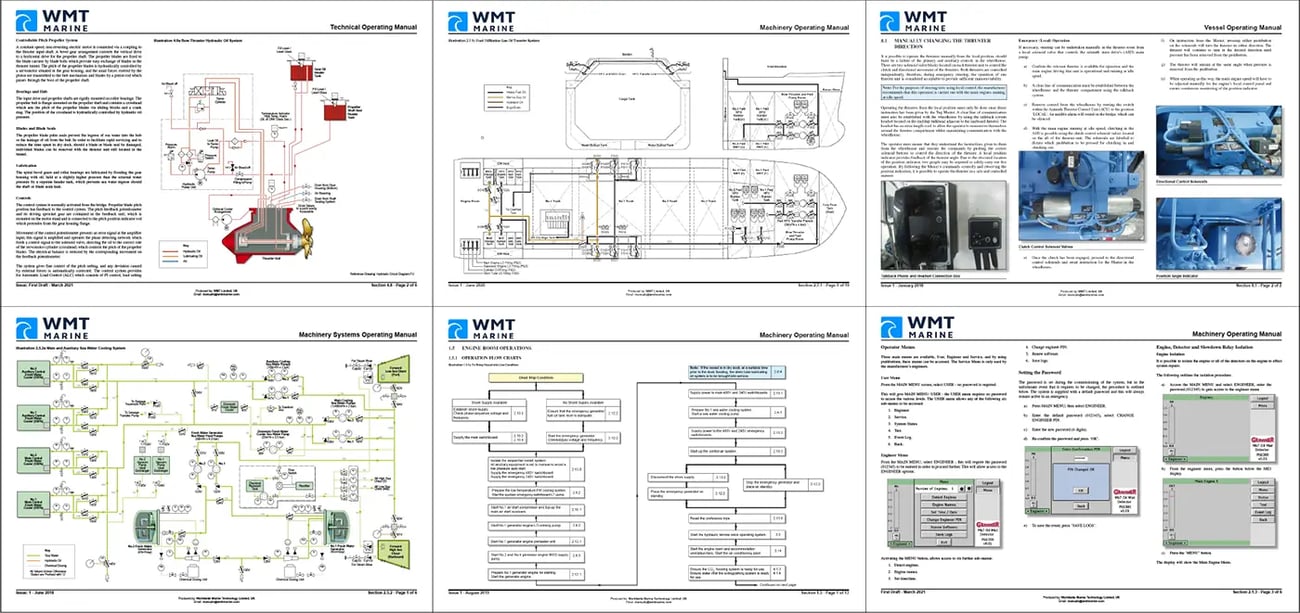
The machinery manual covers the mechanical and auxiliary systems in the engine room. Each section makes use of detailed illustrations and photographs of the equipment taken during visits to the vessel, where applicable.
Section 1: Machinery Operational Overview
Detailed arrangement drawings of the engine room and all auxiliary machinery spaces. Flow charts aid in commissioning the vessel from varying states of readiness.
Section 2: Main Engine and Auxiliary Systems
Operation of the mechanical and electrical systems used throughout the ship, covering the main engines, boilers and auxiliary systems through to power generation and distribution.
Section 3: Machinery Control Systems
Detailed information on the control systems used in the control room and machinery spaces, including extension alarms and procedures for unmanned duty.
Section 4: Emergency Systems
Information on machinery-space emergency systems, including the fire main, extinguishers, foam, high-pressure water mist, CO2 installations and quick-closing valves.
Section 5: Emergency Procedures
Emergency procedures such as emergency main-engine operation, emergency steering and the actions to follow during incidents such as flooding.
Bridge Systems Operating Manuals
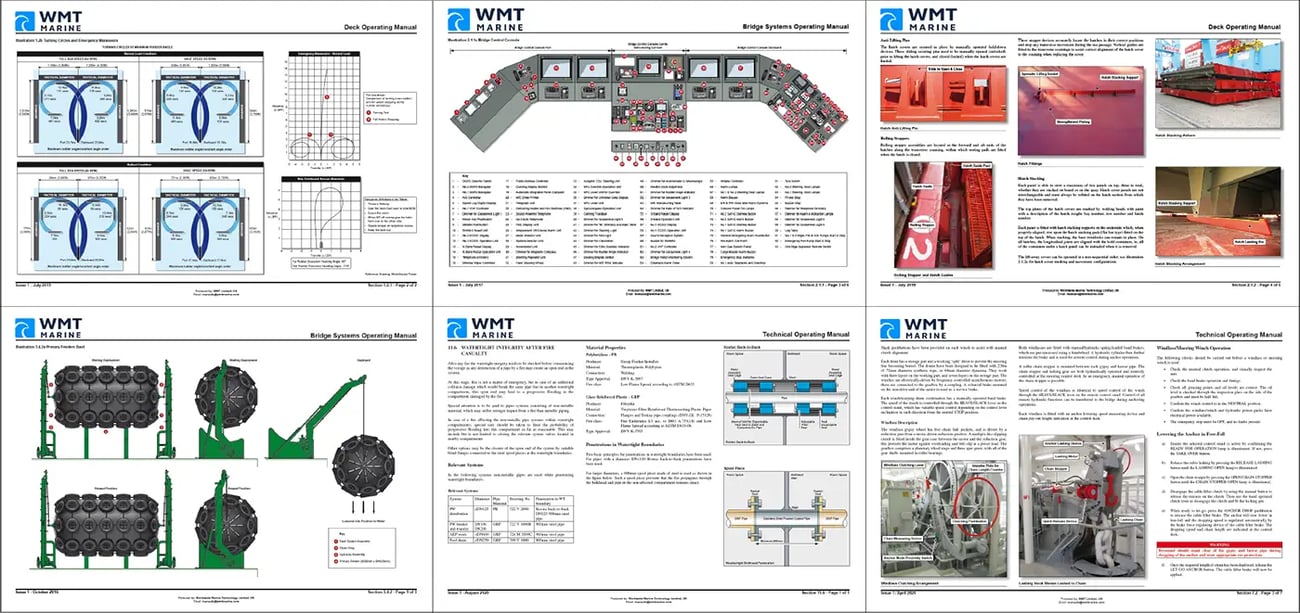
The Bridge Systems Operating Manual provides a vessel-specific reference document for all navigational systems and can also include deck equipment. Each section makes use of detailed illustrations and photographs of the equipment taken during visits to the vessel, where applicable.
Section 1: Ship's Characteristics
Ship's principal and performance data and ship-handling characteristics, supported by comprehensive deck layouts and tank-capacity plans.
Section 2: Bridge Layout and Equipment
Equipment layouts, system-configuration diagrams and navigation-system operating guides. GMDSS equipment and operation are also included.
Section 3: Deck Equipment
The layout and operation of deck machinery, including mooring arrangements, deck cranes and lifeboat-launching arrangements.
Section 4: Emergency Systems and Procedures
Procedures that should be adopted in emergency situations such as fire, flooding and man overboard.
Section 5: Miscellaneous Procedures
Information on bridge teamwork, watch handover, watchkeeping, pilot boarding and helicopter operations.
SOLAS, LSA and FFE Training Manuals
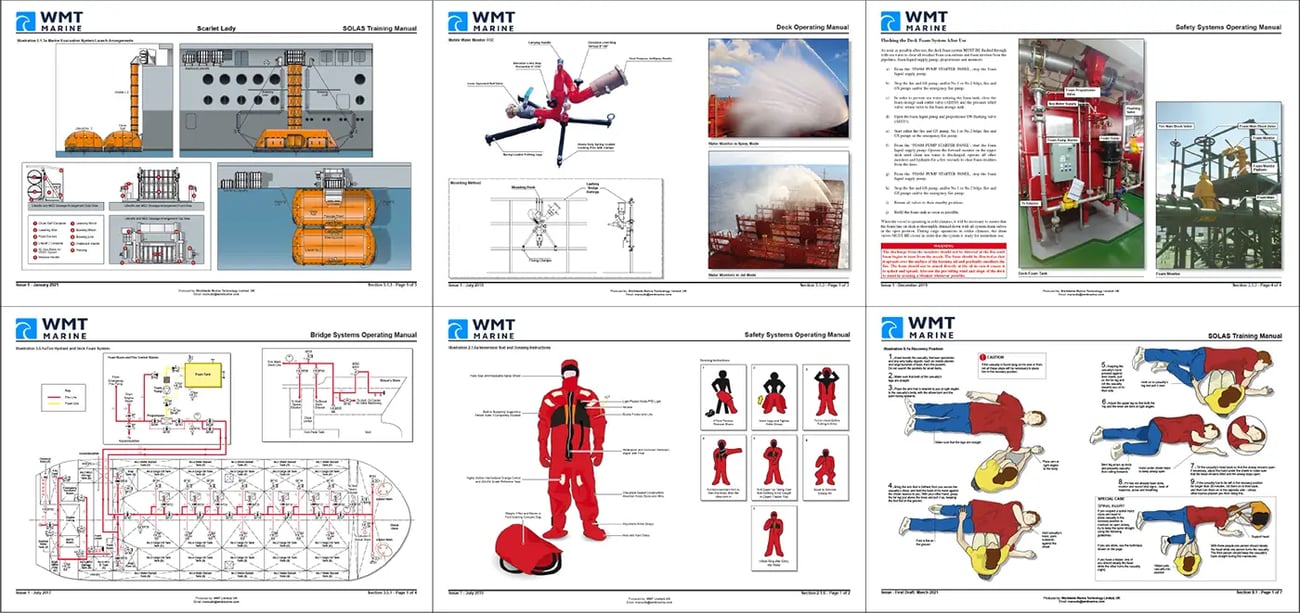
We produce high-quality, ship-specific SOLAS manuals so that crew can easily understand and carry out all related SOLAS functions. SOLAS manuals are divided into sections detailing the following:
- ✓ Emergency instructions, including muster details and emergency signals.
- ✓ Emergency procedures for onboard incidents such as a collision or grounding.
- ✓ Ship’s safety systems and construction, including fire-retarding systems and escape-route plans for each deck.
- ✓ Fire-detection and firefighting systems, breathing apparatus, extinguishers and ship fire-equipment plans.
- ✓ Survival craft, including launching, retrieval, mustering and embarkation procedures.
- ✓ Survival equipment, including lifejackets, immersion suits, pyrotechnics and survival techniques.
- ✓ Emergency communication equipment, including EPIRBs and SARTs.
- ✓ Search-and-rescue procedures, including man overboard, missing-person searches and helicopter operations.
- ✓ Emergency medical equipment available on the vessel and first aid for common shipboard injuries.